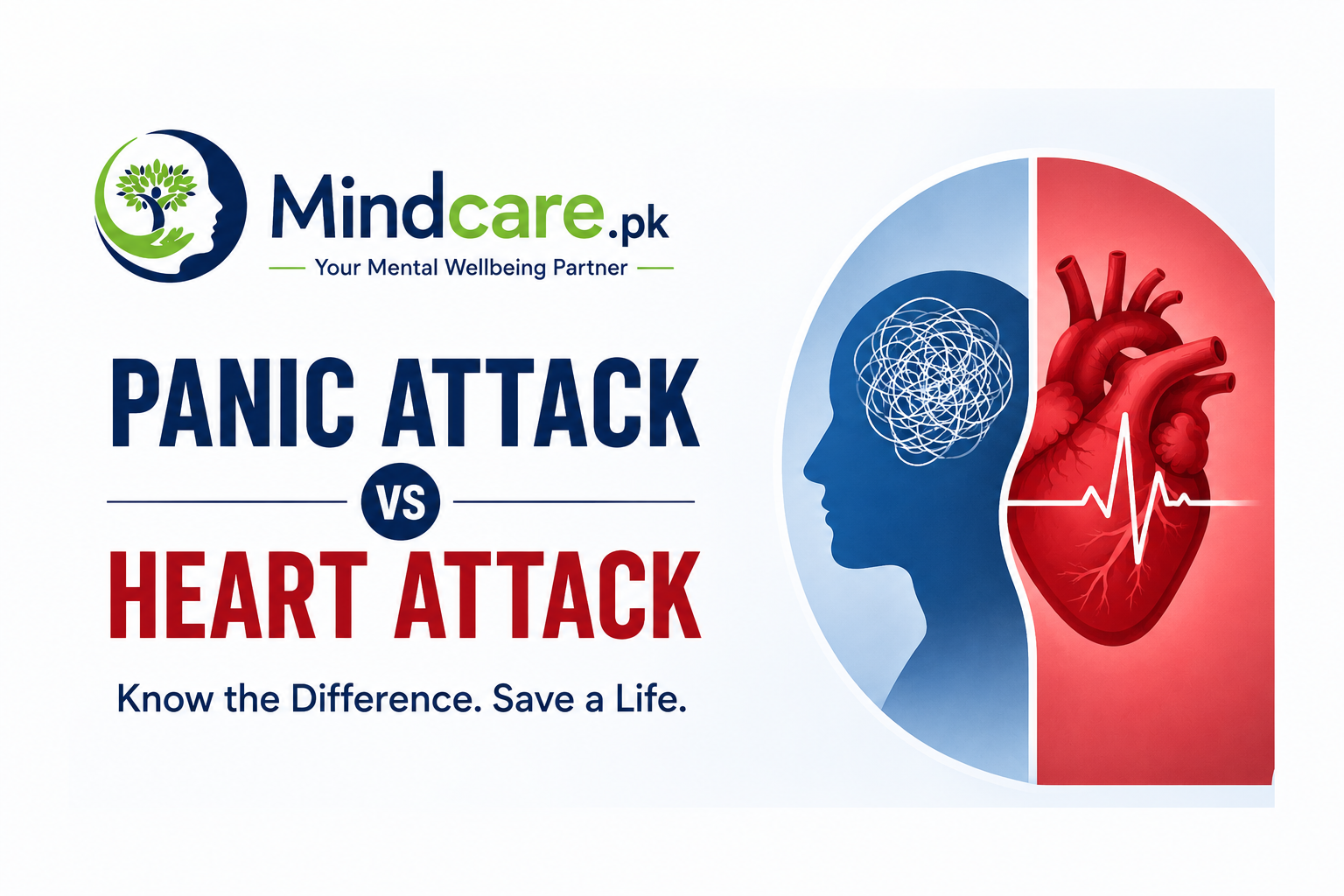
Panic Attack or Heart Attack? How to Tell the Difference
Have you ever felt your heart pounding, your chest tightening, and a sudden fear that something is terribly wrong with your health? Many people who experience their first panic attack feel absolutely certain they are having a heart attack. The symptoms can appear suddenly, feel overwhelming, and mimic serious medical emergencies.
Yet panic attacks and heart attacks are very different conditions—one is psychological and one is medical.
Understanding the difference between them can prevent unnecessary fear, avoid emergency room visits, and help you know when to seek immediate medical help versus mental health support.
Let's explore how to recognise the difference and what steps to take if you experience these symptoms.
Why Panic Attacks Feel Like Heart Attacks
Panic attacks can feel terrifying because they activate the body's fight-or-flight response.
During this response, the body reacts as if it is under threat—even if there is no real danger. This can cause:
-
Rapid heartbeat
-
Shortness of breath
-
Sweating
-
Trembling
-
Dizziness
-
Chest discomfort
-
A feeling of impending doom
Because many of these symptoms overlap with heart attacks, people often become extremely frightened.
Learning to distinguish between the two is important—not to dismiss your symptoms, but to respond wisely.
Key Differences Between a Panic Attack and a Heart Attack
Although symptoms can appear similar, there are several important differences to look for.
1. Onset of Symptoms
Panic Attack
Usually starts suddenly, often triggered by stress, anxiety, or emotional overwhelm.
Symptoms typically peak within 10 minutes.
Heart Attack
May begin during physical exertion, extreme stress, or without warning.
Symptoms usually build gradually and last longer than 15–20 minutes.
2. Nature of Chest Pain
Panic Attack
Chest pain is usually:
-
Sharp
-
Localized
-
Short-lived
-
Improves with slow breathing or reassurance
Heart Attack
Chest pain is usually:
-
Squeezing, crushing, or heavy pressure
-
May radiate to the left arm, shoulder, back, jaw, or stomach
-
Does not improve with rest or breathing exercises
-
Feels persistent and dangerous
3. Duration
Panic Attack
-
Typically lasts 5–20 minutes.
-
Symptoms slowly reduce.
Heart Attack
-
Symptoms often persist for more than 20 minutes.
-
Pain may worsen with time or physical activity.
4. Triggers
Panic Attack
Often triggered by:
-
Emotional stress
-
Traumatic memories
-
Overthinking
-
Fear of losing control
-
Anxiety about health
Heart Attack
Often triggered by:
-
Physical exertion
-
High blood pressure
-
High cholesterol
-
Smoking
-
Diabetes
-
Family history of heart disease
5. Additional Symptoms
Panic Attack
-
Fear of dying
-
Feeling detached
-
Numbness or tingling in fingers
-
Rapid, shallow breathing
-
Hyperventilation
Heart Attack
-
Nausea or vomiting
-
Cold sweat
-
Extreme fatigue
-
Pain in shoulder, jaw, arm, or back
-
Sudden collapse or weakness
When Should You Immediately Seek Medical Help?
Even if you suspect a panic attack, always seek emergency care if:
-
The chest pain is severe or crushing
-
Pain spreads to the arm, jaw, back, or shoulder
-
You feel extremely weak or faint
-
You experience nausea, vomiting, or cold sweat
-
You have a history of heart disease
-
You are unsure of the cause
It is far better to check with a doctor than to assume it is just anxiety.
How to Calm Yourself During a Panic Attack
If you know you are prone to panic attacks and doctors have ruled out heart problems, you can practice the following steps:
1. Slow Down Your Breathing
Try:
-
Inhale for 4 seconds
-
Hold for 4 seconds
-
Exhale for 6 seconds
Repeat several times. This lowers heart rate and reduces panic. (Our guide on diaphragmatic breathing walks through the full technique.)
2. Ground Yourself
Use the 5-4-3-2-1 method:
-
5 things you can see
-
4 things you can touch
-
3 things you can hear
-
2 things you can smell
-
1 thing you can taste
This anchors you in the present moment.
3. Remind Yourself It Is a Panic Attack
Say to yourself:
"This is uncomfortable, but not dangerous. It will pass."
Reassurance can help interrupt the cycle of fear.
4. Move to a Safe Space
Sit down.
Reduce noise.
Get away from crowded environments if possible.
Focus on regulating your breathing. (If someone you know experiences panic often, our guide on helping a friend during a panic attack can help.)
5. Delay Reactions
Avoid making decisions or reacting strongly during the attack.
Wait until you feel calm before responding.
How to Reduce the Frequency of Panic Attacks
Panic attacks can be reduced through consistent lifestyle changes and psychological strategies:
-
Practice deep breathing daily
-
Reduce caffeine intake
-
Improve sleep hygiene
-
Exercise regularly
-
Journal your emotions
-
Avoid excessive stimulation
-
Practice mindfulness
-
Seek psychotherapy when needed
Cognitive Behavioral Therapy (CBT) is considered one of the most effective treatments for panic disorder.
Why Understanding These Differences Matters
Many people spend years living in fear of their symptoms.
They visit emergency rooms repeatedly.
They avoid places, situations, or activities that trigger fear.
They constantly worry about their health.
Understanding that panic attacks are not dangerous—although they feel intense—can significantly improve daily life and reduce medical anxiety.
At the same time, being informed helps you take true medical emergencies seriously.
When to Seek Professional Help
Consider consulting a mental health professional if:
-
Panic attacks are frequent
-
They interfere with your daily activities
-
You avoid places or people out of fear
-
You experience persistent anxiety
-
Your health worries become overwhelming
Panic attacks are highly treatable through therapy, coping strategies, and sometimes medication.
You do not have to live in fear.
Final Thoughts
Panic attacks and heart attacks share some symptoms, but they arise from very different causes.
Panic attacks are the body's exaggerated response to stress or anxiety.
Heart attacks are true medical emergencies caused by blocked blood flow to the heart.
Learning to distinguish them helps you respond wisely, avoid unnecessary fear, and take appropriate action.
If you are unsure, always seek medical evaluation. Better to be safe.
If your symptoms turn out to be panic attacks, the good news is that they can be effectively managed with the right support.
Need Professional Support?
If panic attacks or health anxiety are affecting your daily life, MindCare.pk offers confidential mental health services online. Our licensed psychologists provide compassionate, evidence-based treatment to help you understand your symptoms and reclaim your peace of mind. Book an online session when you're ready.