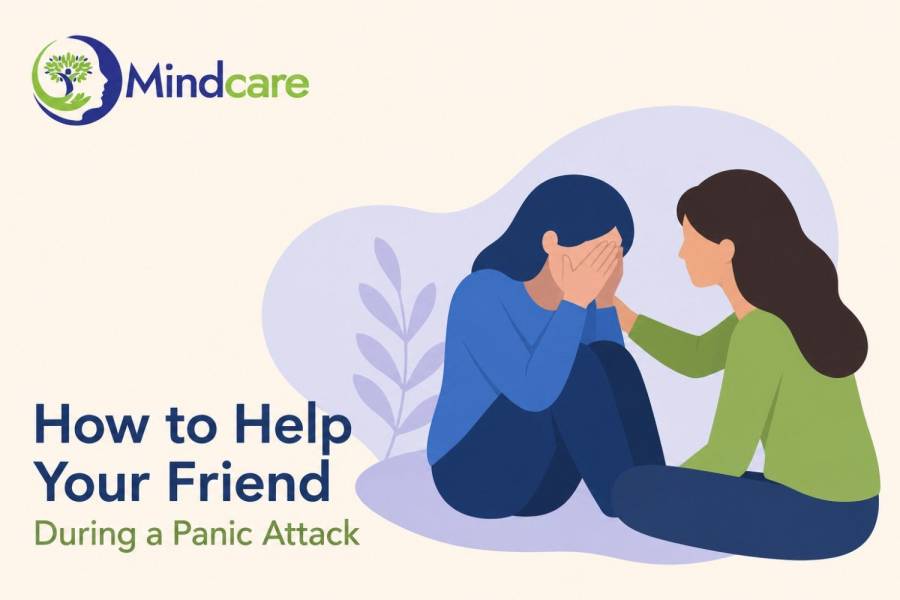
How to Help a Friend During a Panic Attack
Watching a friend go through a panic attack can feel frightening and confusing. They may suddenly become breathless, dizzy, shaky, tearful, or complain of chest tightness and a racing heart. In that moment, they may feel as if they are losing control,
collapsing, or even dying. As a friend, you may also panic because you do not know what to do.
The good news is that your calm presence can make a big difference. While you cannot “stop” a panic attack instantly, you can help your friend feel safer, breathe more slowly, and recover more comfortably.
This guide explains what a panic attack looks like and how you can support a friend during attack.
What Is a Panic Attack?
A panic attack is a sudden wave of intense fear or discomfort that comes with strong physical symptoms. It often feels overwhelming and can happen
even when there is no immediate danger.
Common symptoms include:
- Racing or pounding heartbeat
- Chest tightness or chest pain
- Sweating
- Shaking or trembling
- Feeling dizzy or lightheaded
- Shortness of breath
- Feeling detached or unreal
- Fear of fainting, losing control, or dying
Sometimes panic builds gradually from severe anxiety. A person may first feel restless, tense, and physically uncomfortable. If the fear increases, it can turn into a full panic attack.
One of the biggest problems during a panic attack is overbreathing or hyperventilation. The person may try to take deeper and quicker breaths because they feel they cannot get enough air. But breathing too fast can actually worsen symptoms
such as:
- Dizziness
- Tingling in hands or face
- Chest discomfort
- Feeling faint
- Increased fear
This creates a vicious cycle:
panic → faster breathing → more physical symptoms → more panic
That is why calm support and slow breathing can be so helpful.
How to Help a Friend During a Panic Attack
1. Stay calm yourself
Your friend is likely feeling terrified and out of control. If you speak in a rushed, panicked, or alarmed way, it can increase their fear. Try to remain calm, steady, and reassuring.
You can say:
- “I’m here with you.”
- “You’re safe right now.”
- “This will pass.”
- “Let’s slow your breathing together.”
Your calm voice can help anchor them in the moment.
2. Move them to a quieter, less overwhelming space if possible
If the environment is noisy, crowded, or overstimulating, gently help them move to a quieter place. A calmer setting can reduce sensory overload and help them regain control.
Do not force them to move if they resist or feel too weak. Simply reduce stress around them as much as possible.
3. Encourage slow breathing — not deep, fast breathing
A person having a panic attack often feels they need to breathe more and faster, but this can worsen hyperventilation. Instead, help them slow their breathing down.
You can guide them gently:
- “Close your mouth if you can.”
- “Breathe in slowly through your nose.”
- “Now breathe out slowly.”
- “Let’s do it together.”
Try counting slowly:
- Inhale for 4 seconds
- Exhale for 4–6 seconds
The goal is not perfect breathing — it is simply to slow the pace and reduce the spiral of panic. (Our guide on diaphragmatic breathing walks
through the technique in detail.)
4. Use simple grounding techniques
Grounding helps bring attention away from frightening body sensations and back to the present moment.
You can say things like:
- “Press your feet into the floor.”
- “Can you feel the chair under you?”
- “Look around and name three things you can see.”
- “Focus on my voice.”
These small prompts can help interrupt the cycle of fear and physical distress.
5. Reassure them without dismissing their feelings
Panic attacks feel very real and physically intense. Avoid saying things like:
- “Calm down.”
- “It’s all in your head.”
- “You’re overreacting.”
Instead, validate their experience while offering reassurance:
- “I know this feels awful right now.”
- “Your body is in panic mode, but you are not in danger.”
- “I’m staying with you.”
Validation helps the person feel understood rather than judged.
6. Encourage them to sit down and rest
If they are feeling dizzy, shaky, or exhausted, help them sit somewhere comfortable. Panic attacks can leave a person physically drained once the intense symptoms begin to settle.
A seated position can also help them feel safer and more supported while breathing slows down.
7. Stay with them until the worst has passed
Do not leave your friend alone if they are frightened and asking for support. Even sitting quietly beside them can be comforting.
You do not need to say a lot. Sometimes your presence, patience, and calm body language are enough.
What to Do After the Panic Attack
Once the panic begins to settle, your friend may feel:
- Very tired
- Emotionally overwhelmed
- Embarrassed or ashamed
- Physically shaky or weak
This is normal. Their body has just gone through a stress response.
You can support recovery by offering:
- A glass of water
- A quiet place to sit and rest
- Gentle reassurance
- Space, if they want it
- A warm drink like tea, if that comforts them
Do not pressure them to “explain everything” immediately. Let them recover first.
What Not to Do During a Panic Attack
Try to avoid these common mistakes:
Don’t argue with them about what they are feeling
Even if you know it is a panic attack, the experience feels real and frightening to them.
Don’t crowd them with too many questions
Too much talking can be overwhelming. Keep your words short and calming.
Don’t tell them to “just relax”
This usually does not help and may make them feel misunderstood.
Don’t shame them
Panic attacks are not a sign of weakness, attention-seeking, or “drama.” They are a real anxiety response.
Don’t force physical touch
Some people find touch comforting, while others feel more overwhelmed by it. Ask first:
- “Would you like me to hold your hand?”
- “Is it okay if I sit closer?”
When Should You Seek Medical Help?
Although panic attacks are common, it is important to take symptoms seriously if you are unsure what is happening. Seek medical help or emergency support if:
- It is the person’s first episode and symptoms are severe
- They have crushing chest pain, collapse, or lose consciousness
- They are having trouble breathing that does not improve
- They have a known heart condition or other serious medical illness
- The symptoms seem very different from their usual panic attacks
- They are at risk of harming themselves
When in doubt, it is always okay to seek medical advice. (If chest symptoms are the main concern, our guide on telling a panic attack from a heart attack can help.)
How Friends Can Support Long-Term Recovery
If your friend experiences panic attacks often, support does not end when the attack is over. You can help by:
- Encouraging them to speak with a psychologist or mental health professional
- Checking in without being pushy
- Learning about anxiety and panic
- Helping them practice healthy coping skills such as breathing exercises, sleep hygiene, and stress management
- Reminding them that seeking help is a strength, not a weakness
Panic attacks can be treated effectively with psychological support, especially therapies that teach people how to understand body sensations, manage anxious thoughts, and regulate breathing.
At Mindcare.pk, we believe that mental health support begins with understanding, compassion, and practical tools. Sometimes, simply knowing how to stay beside someone in their hardest moment can make all the difference. If you or your
friend need support, you can book a confidential online session at any time.