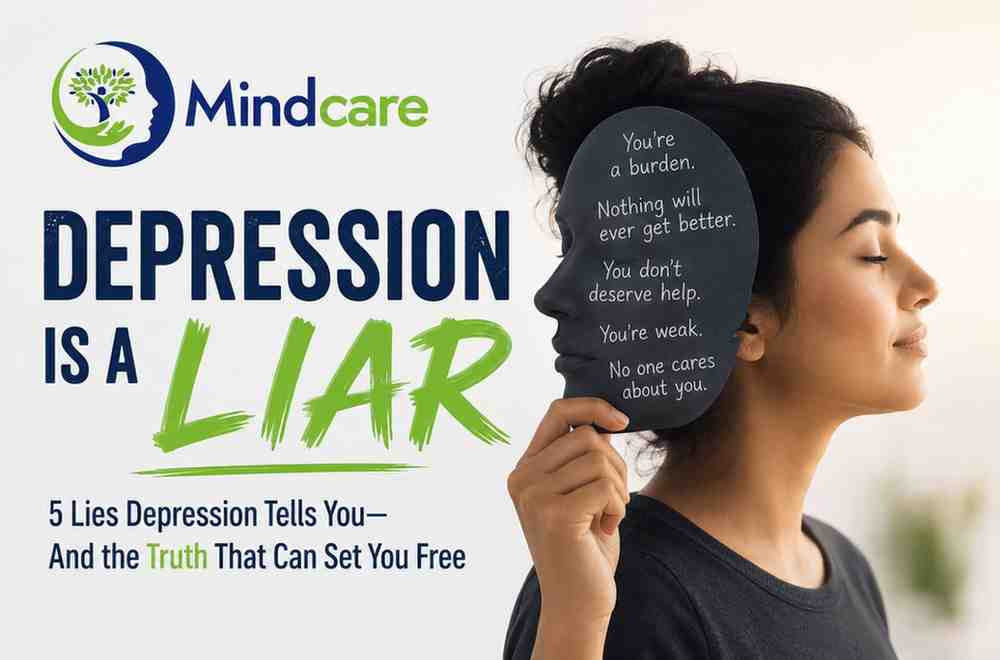
Depression Is a Liar: 5 Lies Depression Tells You—And the Truth That Can Set You Free
"The hardest thing about depression isn't always the sadness—it's believing the lies your mind tells you."
Depression is one of the most misunderstood mental health conditions. It doesn't simply make people feel sad; it changes the way they think, feel, and see the world around them.
When someone is struggling with depression, their mind often becomes an unreliable narrator. Thoughts that feel absolutely true are often symptoms of the illness—not reflections of reality.
At MindCare.pk, we often remind our clients of one important truth:
Depression is a liar.
It whispers hopelessness, self-criticism, shame, and isolation until those lies begin to sound like facts.
The positive news is that thoughts are not facts, and depression can be treated.
Let's uncover five of the biggest lies depression tells—and the truths that can help you begin healing.
What Does Depression Do to Your Mind?
Depression affects areas of the brain involved in:
-
Emotional regulation
-
Memory
-
Motivation
-
Decision-making
-
Self-perception
As a result, people experiencing depression often:
-
Focus more on negative experiences
-
Ignore positive evidence
-
Expect the worst
-
Blame themselves unnecessarily
-
Lose hope about the future
Psychologists call these cognitive distortions—thinking patterns that make reality appear much darker than it actually is.
Understanding these distortions is the first step toward challenging them. Many of these patterns are also reinforced by small daily behaviours — see the 10 micro habits that quietly fuel depression.
Lie #1: "You'll Never Be Happy Again"
Perhaps the most convincing lie depression tells is:
"Nothing will ever get better."
When you're depressed, it can feel like you've been trapped in darkness forever—even if the depression started only weeks or months ago.
Your brain begins to predict that:
-
You'll always feel exhausted.
-
Life will never improve.
-
Therapy won't help.
-
Medication won't work.
-
Happiness belongs to other people.
The Truth
Depression is treatable.
Millions of people recover every year through combinations of:
-
Therapy
-
Medication (when appropriate)
-
Lifestyle changes
-
Social support
-
Self-care practices
Feelings are temporary—even when they feel permanent.
Many people who once believed they would never smile again eventually look back and realize depression was lying to them.
Practical Exercise
Instead of asking:
"Will I ever be happy again?"
Ask:
"Is it possible that my depressed brain is predicting the future inaccurately?"
This small shift creates room for hope.
Lie #2: "You're a Burden"
Depression often convinces people that they are:
-
Too much for others
-
Difficult to love
-
A problem everyone would be better without
Because of this lie, many people withdraw from family and friends.
Ironically, isolation strengthens depression.
The Truth
Most people who genuinely care about you would rather know you're struggling than lose you in silence.
Imagine if someone you loved said:
"I'm struggling."
Would you think they were a burden?
Probably not.
You would want to help.
Others often feel the same about you.
Seeking support isn't selfish.
It's human.
Lie #3: "You Don't Deserve Help"
Many people delay treatment because they think:
-
"Others have it worse."
-
"My problems aren't serious enough."
-
"I should be able to handle this alone."
This comparison trap prevents thousands from getting the care they deserve.
The Truth
Pain doesn't need to be compared to be valid.
Mental health isn't a competition.
You don't have to wait until you're completely overwhelmed before reaching out.
Just as people visit a doctor before a physical illness becomes severe, emotional pain also deserves early care.
You deserve support simply because you're human.
Lie #4: "You're Weak for Feeling This Way"
Depression often attacks self-worth.
It tells people:
-
"You're lazy."
-
"You're weak."
-
"You're failing."
-
"Other people cope better."
These thoughts create shame, which often makes depression even worse.
The Truth
Depression is not a character flaw.
It is a medical and psychological condition influenced by many factors, including:
-
Brain chemistry
-
Genetics
-
Trauma
-
Chronic stress
-
Physical health
-
Life experiences
You would never call someone with diabetes or asthma "weak."
Mental illness deserves the same compassion.
In fact, continuing to work, care for your family, or simply getting out of bed while battling depression often requires incredible strength.
Lie #5: "No One Cares About You"
This may be depression's most dangerous lie.
It tells people:
-
Nobody would notice if you disappeared.
-
You're alone.
-
Nobody understands.
-
Nobody wants to help.
These thoughts often lead people to isolate themselves even further.
The Truth
Depression filters out evidence of love.
It magnifies rejection while minimizing kindness.
The reality is that many people care deeply—even if they don't always know you're struggling.
Sometimes they simply don't realize how much pain you're carrying.
Reaching out can feel terrifying, but it also gives others the opportunity to support you.
You are far more valued than depression allows you to believe.
Why Depression Feels So Convincing
Many people ask:
"If these thoughts aren't true, why do they feel so real?"
Because emotions influence perception.
When you're depressed, your brain selectively notices evidence that supports hopelessness while ignoring evidence that contradicts it.
This creates a vicious cycle:
Negative thoughts → painful emotions → withdrawal → loneliness → more negative thoughts.
Breaking this cycle is one of the primary goals of psychotherapy.
How to Challenge Depression's Lies
You don't have to argue with every negative thought—but you can learn to question them.
Try asking yourself:
-
What evidence supports this thought?
-
What evidence challenges it?
-
Would I say this to someone I love?
-
Is this depression talking?
-
What would a compassionate friend say?
These questions help create psychological distance from depressive thinking.
Small Steps That Help
Recovery doesn't usually happen overnight.
It happens through small, consistent actions.
Consider trying:
✅ Get out of bed at the same time each day.
✅ Spend 10–20 minutes in sunlight.
✅ Go for a short walk.
✅ Eat regular meals.
✅ Stay connected with at least one trusted person.
✅ Reduce excessive social media use.
✅ Practice deep breathing or mindfulness.
✅ Keep a journal of your thoughts and emotions.
✅ Celebrate small victories.
Progress—not perfection—is the goal. For a gentle, practical starting point, see our guide to micro habits that support depression recovery.
When Should You Seek Professional Help?
If symptoms of depression persist for more than two weeks and begin affecting your daily life, it is important to consult a qualified mental health professional. You can also read more about the signs, causes, and effective treatments for depression.
Seek help if you experience:
-
Persistent sadness
-
Loss of interest in activities
-
Changes in sleep or appetite
-
Difficulty concentrating
-
Feelings of worthlessness
-
Excessive guilt
-
Thoughts of self-harm or suicide
Early intervention often leads to better outcomes.
There is no shame in asking for help.
A Message from MindCare.pk
If you are living with depression today, remember this:
Your thoughts are not always telling you the truth.
Depression may convince you that you're hopeless, broken, weak, or alone—but those are symptoms of the illness, not your identity.
Healing is possible.
Recovery is possible.
Hope is possible.
You don't have to fight this battle by yourself.
Final Thoughts
Depression is powerful because it disguises itself as truth. It convinces people that their pain is permanent, that they are unworthy of love, and that asking for help is a sign of weakness.
But every one of these beliefs can be challenged.
With compassionate support, evidence-based therapy, healthy coping strategies, and patience, people recover from depression every day.
If depression has been lying to you, remember this one truth:
You are not your depression.
And no matter how convincing its voice may seem, it does not get the final word.
Need Professional Support?
If you or someone you love is struggling with depression, MindCare.pk offers confidential online and in-person psychological services with qualified mental health professionals. Reaching out for help
is a courageous first step toward healing.