
MindCare Pakistan offers convenient and affordable online therapy, connecting you with licensed therapists from the comfort of your own home. Find support for anxiety, depression, relationships, and more.

Connect with a qualified psychologist online from the convenience of your home in Pakistan.

Book Appointment
Address

Islamabad, Pakistan
Trauma-Informed Psychological Support

Online Trauma & PTSD Therapy

When Something From the Past Still Feels Present.

After a frightening, overwhelming, or deeply distressing experience, the mind and body may continue reacting as though danger is still close. Memories can intrude unexpectedly, certain situations may feel impossible to face, or you may remain tense and watchful even when you want to feel safe.

Trauma-informed therapy provides a structured space to understand these responses and work toward reducing their impact on your present life—at a pace that considers your needs, readiness, and safety.

Book an Appointment
✓ Private Online Sessions ✓ Trauma-Informed Support ✓ Accessible Wherever You Are
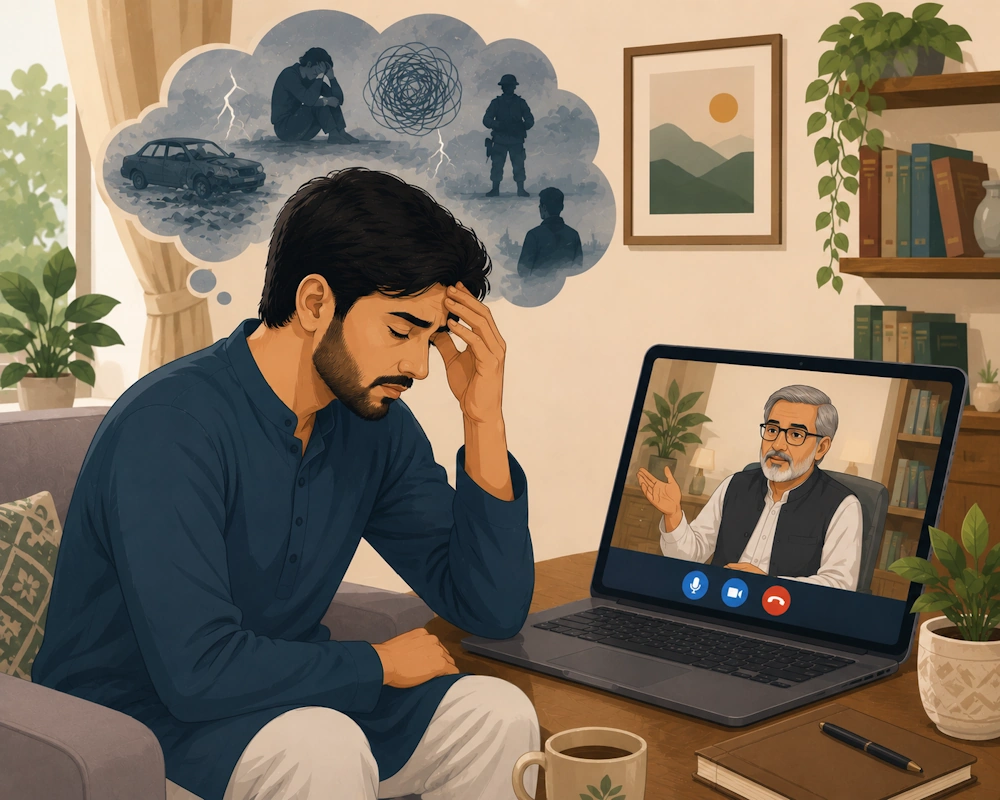
Person attending online trauma and PTSD therapy with a psychologist
Understanding Trauma Responses

The Event May Be Over, but Your Alarm System May Not Feel That Way

Trauma responses can make sense when understood as ways the mind and body learned to protect you during or after overwhelming experiences. The difficulty is that these protective responses can continue even when the original danger has passed.

A sound, place, smell, conversation, physical sensation, anniversary, or seemingly unrelated situation may trigger a strong reaction before you have time to understand why. Some people feel constantly alert; others become numb, disconnected, or avoid anything that might bring difficult memories closer.

Therapy does not begin by assuming you should simply “get over” what happened. It starts by understanding how your experiences are affecting you now and what may help you feel more able to live in the present.

Trauma Can Show Up in Different Ways

  • Unwanted memories, nightmares, or feeling as though something is happening again
  • Avoiding places, people, conversations, feelings, or reminders
  • Feeling constantly alert, easily startled, tense, or unable to relax
  • Difficulty sleeping or concentrating
  • Feeling emotionally numb, detached, ashamed, guilty, or different from who you were before
  • Changes in trust, relationships, beliefs about yourself, or your sense of safety
Trauma and PTSD Are Related—but Not Identical

Experiencing Trauma Does Not Automatically Mean You Have PTSD

People can have significant emotional reactions after traumatic experiences without meeting the criteria for post-traumatic stress disorder. A professional assessment considers the pattern, duration, severity, and impact of symptoms rather than applying a diagnosis based only on the event itself.

Intrusion

Distressing memories, nightmares, flashback-like experiences, or strong emotional and physical reactions to reminders.

Avoidance

Trying not to think or talk about what happened, or avoiding situations, people, places, and activities connected with reminders.

High Alert

Feeling watchful, irritable, easily startled, unsafe, restless, or having difficulty sleeping and concentrating.

Mood & Beliefs

Guilt, shame, emotional numbness, loss of interest, disconnection, or lasting changes in how you see yourself, others, and the world.

A Common Concern About Trauma Therapy

“Will I Have to Tell the Whole Story Immediately?”

Many people delay seeking support because they fear therapy will require them to describe every traumatic detail before they feel ready.

Trauma-informed therapy should not be about forcing disclosure. Your psychologist first needs to understand your current difficulties, circumstances, safety, coping, and goals. What is discussed—and how quickly—is guided by the therapeutic approach and your individual needs.

Safety and Understanding Come Before Rushing the Process

Early work may include understanding trauma responses, identifying triggers, developing ways to manage overwhelming emotions or physical arousal, improving stability in daily life, and discussing what type of treatment may be appropriate.

Some evidence-based trauma therapies do involve carefully approaching traumatic memories or reminders rather than avoiding them indefinitely. When such work is appropriate, it should be structured and carried out by a suitably trained professional—not as an uncontrolled retelling of painful experiences.

You can ask your psychologist what approach they use, why they recommend it, what it involves, and what alternatives may be available before deciding how to proceed.

The Effects Can Extend Beyond Memories

Trauma Can Change How Safe the World Feels

After trauma, difficulties are not always limited to remembering what happened. You may begin organising parts of life around preventing danger, avoiding vulnerability, or staying in control.

This can affect relationships, work, sleep, physical closeness, travel, social situations, parenting, or everyday decisions. Some people become highly independent because relying on others feels unsafe; others struggle with boundaries, trust, anger, or feeling emotionally present.

Therapy can help identify how past experiences may be shaping present reactions without reducing every difficulty in your life to trauma.

You May Notice Thoughts Such As:

  • “I know I am safe, but my body doesn't believe it.”
  • “I avoid anything that might remind me of what happened.”
  • “I don't trust people the way I used to.”
  • “I blame myself even though part of me knows it wasn't my fault.”
  • “I feel disconnected from everyone around me.”
  • “I need to stay in control or something bad might happen.”
Treatment Is Individual

What Can Trauma Therapy Involve?

There is no single therapy process that is appropriate for every person who has experienced trauma. Treatment depends on your symptoms, history, current circumstances, goals, safety, and the psychologist's training.

Evidence-based trauma-focused approaches may address avoidance, unhelpful beliefs, trauma memories, emotional responses, and patterns that keep a sense of threat active in the present.

Depending on Your Assessment, Therapy May Focus On:

  • Understanding how trauma responses work and recognising personal triggers
  • Developing strategies for managing intense emotions, anxiety, or physiological arousal
  • Reducing avoidance that is restricting everyday life
  • Examining guilt, shame, self-blame, danger beliefs, or changes in trust
  • Carefully working with trauma memories when clinically appropriate
  • Reconnecting with relationships, routines, activities, and parts of life that matter to you

Specific treatments such as trauma-focused CBT, exposure-based approaches, EMDR, or other specialist methods should only be offered when appropriate and by professionals with relevant training. Ask about the psychologist's experience and treatment approach when booking.

You Can Begin by Talking About What Is Affecting You Now

You do not need to prepare a complete account of everything that happened before seeking professional support.

Your First Appointment

Starting With What You Need Help With Today

Your first appointment is an opportunity to discuss what has been happening, how it is affecting your life, and what you hope to change. You may be asked about current symptoms, sleep, mood, relationships, daily functioning, previous support, physical health, medication, substance use where relevant, and any current safety concerns.

You do not necessarily need to describe traumatic events in detail during an initial appointment. The psychologist can explain their approach, discuss whether trauma-focused treatment appears appropriate, and consider whether additional medical, psychiatric, or specialist support may be needed.

Confidentiality and Safety

Psychological sessions are handled with professional confidentiality, subject to applicable ethical, legal, and safety limits. Your psychologist should explain these limits, including circumstances involving serious risk or safeguarding concerns.

If you are currently in an unsafe situation, treatment planning may also need to consider immediate safety and practical support rather than focusing only on past trauma.

Pakistanis at Home and Abroad

Trauma Is Experienced Within a Personal and Cultural Context

People do not experience trauma separately from family, community, culture, faith, migration, and social circumstances. These contexts may influence what feels safe to discuss, how distress is understood, whether family members know what happened, and what support is available.

For Pakistanis living abroad, distance from family, migration experiences, isolation, or living between different cultural expectations may also shape how someone copes.

Support Should Understand Context Without Making Assumptions

A culturally aware psychologist can make room for relevant family, cultural, or faith-related considerations while keeping the focus on your individual experience.

  • Private online access from a suitable location
  • Space to discuss family or cultural pressures where relevant
  • Support for Pakistanis living locally or overseas, subject to professional requirements
  • An individual approach rather than assumptions based on culture alone
When Routine Online Therapy May Not Be Enough

Urgent Safety Concerns Need Immediate Local Support

If you are in immediate danger, at immediate risk of harming yourself or someone else, or experiencing another urgent mental health crisis, routine online appointment booking should not be your only response. Seek urgent emergency or crisis support available where you are physically located.

Online Suitability Is Assessed Individually

The severity of symptoms, current safety, dissociation, substance use, privacy, available support, and the type of trauma treatment required can all affect whether online therapy is appropriate.

FAQ & Answers

Common Questions About Trauma & PTSD Therapy

No. People can experience distress after trauma without meeting diagnostic criteria for PTSD. Diagnosis depends on the type and pattern of symptoms, how long they have been present, their impact, and a professional assessment.

You should not be forced to give a detailed account before you are ready. Some trauma-focused treatments do involve structured work with traumatic memories, but this should be explained clearly and carried out appropriately by a trained professional.

Yes. Trauma-related difficulties can persist or become more noticeable later, sometimes after reminders, life changes, additional stress, or another difficult experience. An assessment can help clarify what may be contributing to current symptoms.

Some trauma-focused psychological treatments can be provided online when clinically appropriate. Suitability depends on your symptoms, safety, privacy, location, the treatment being considered, and the psychologist's training and professional requirements.

The availability of a specific specialist treatment depends on whether an appropriately trained psychologist is available. If you are specifically seeking EMDR or another trauma-focused approach, confirm the psychologist's relevant training and treatment method before booking.

There is no single timeline for everyone. Duration depends on your symptoms, circumstances, goals, the treatment approach, other difficulties that may need attention, and how you respond to therapy. Your psychologist can discuss and review a treatment plan with you.