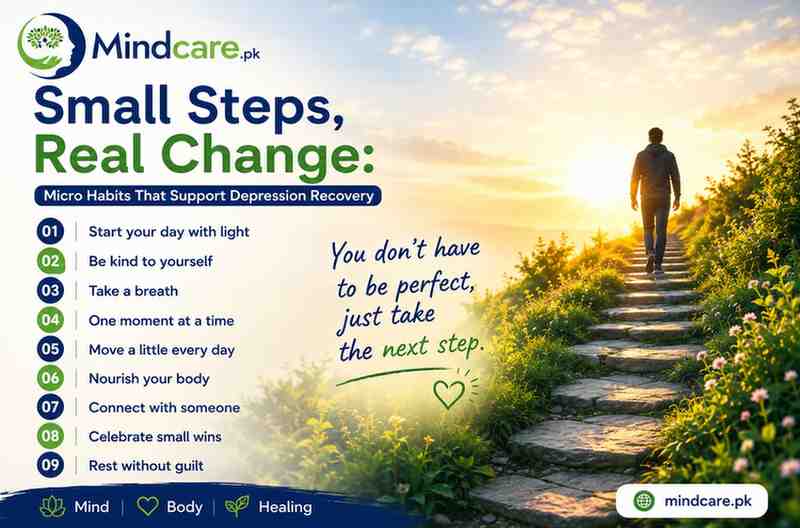
Small Steps, Real Change: Micro Habits That Support Depression Recovery
Gentle, low-effort habits that help rebuild stability — one small win at a time.
Depression has a way of making everything feel heavy — even things that used to be easy, like brushing your teeth or replying to a text. If you're in that place right now, here's something worth hearing: recovery doesn't require big, dramatic changes.
It often starts with habits so small they barely feel like "doing" anything at all.
That's the idea behind micro habits — tiny, low-effort actions that are easy to repeat, even on your hardest days. They don't fix depression on their own, but they can help rebuild a sense of stability, structure, and self-trust, one small win
at a time. (We've also written about the flip side: 10 micro habits that quietly fuel depression.)
You don't have to do this aloneIf things feel too heavy to manage by yourself,
MindCare.pk offers online mental health support — including consultations with qualified therapists and counselors from wherever you are.
Reaching out for professional support alongside these small habits can make a real difference.
Here are some micro habits that many people find genuinely helpful, along with why they work.
1☀️Get Sunlight on Your Face — Even for 2 Minutes
You don't need a long walk. Just step outside, open a curtain, or sit near a window for a couple of minutes in the morning. Natural light helps regulate your body's internal clock, which affects sleep, mood, and energy levels — all of which are often
disrupted in depression.
Try this: Drink your morning tea or water near a window instead of in a dark room.
2🛏️Make Your Bed (Just That, Nothing Else)
This isn't about tidiness. It's about giving your brain one small, completed task first thing in the day — a tiny piece of evidence that says "I did something." On low-energy days, that's enough. You don't need to clean the whole room.
3💧Drink a Glass of Water Before Anything Else
Depression can make basic self-care easy to forget. Dehydration alone can worsen fatigue and low mood. Keeping a water bottle within reach removes the "effort" of getting up to get one.
4🚶Move Your Body for 5 Minutes, No Goal Attached
Not a workout. Not a plan. Just movement — stretching, a short walk to the gate and back, or dancing to one song. The goal isn't fitness; it's reminding your body that it's still capable of motion. Some days, this is the hardest one, and that's okay —
it still counts even in small doses.
5💭Name One Feeling, Out Loud or on Paper
You don't need to journal pages of reflection. Just naming what you feel — "I feel tired," "I feel flat today," "I feel a little lighter than yesterday" — helps create distance between you and the emotion, instead of feeling completely fused with
it.
6💌Send One Message to One Person
Isolation often deepens depression, but reaching out can feel exhausting. Lower the bar: one message, to one person, doesn't need a reply right away. "Thinking of you" or "how's your day going" is enough. Connection doesn't have to be a whole conversation
to matter.
7✅Do One Task You've Been Avoiding — But Make It Tiny
Instead of "clean the kitchen," try "wash one plate." Instead of "reply to all my emails," try "reply to one." Breaking tasks down this small isn't about laziness — it's about working with low motivation instead of fighting it, so you can build
momentum instead of getting stuck before you start.
8🌙Notice One Small Good Thing Before Bed
Not gratitude journaling with pressure to find something profound — just one small, neutral-to-good moment from your day. "The tea was good." "I laughed once." This gently trains your attention to notice that not everything was bad, without forcing positivity
you don't feel.
9😴Protect a Wind-Down Routine, Even a Short One
Depression often disrupts sleep, and poor sleep worsens depression — a difficult cycle. A short, consistent wind-down (dim lights, put the phone down, same rough bedtime) can help signal to your body that it's time to rest, even if sleep doesn't come
easily right away.
A Gentle Reminder
Micro habits work because they lower the barrier to trying. On a hard day, "clean the house" feels impossible, but "wash one plate" doesn't. Over time, these small actions can help rebuild a sense of agency — the quiet belief that you can still
do things, even when depression tries to convince you otherwise.
But it's important to say clearly:
micro habits support recovery, they don't replace professional depression treatment.
If
you're experiencing ongoing low mood, loss of interest, fatigue, or hopelessness, please consider reaching out to a mental health professional. MindCare.pk's online counseling services make it easier to connect with a therapist from home, at a time that works for you. Asking for that kind of support is a sign of strength, not failure — and you can book an online session in just a few minutes.
You don't have to do all nine of these. Even one, done consistently, is a real step forward.