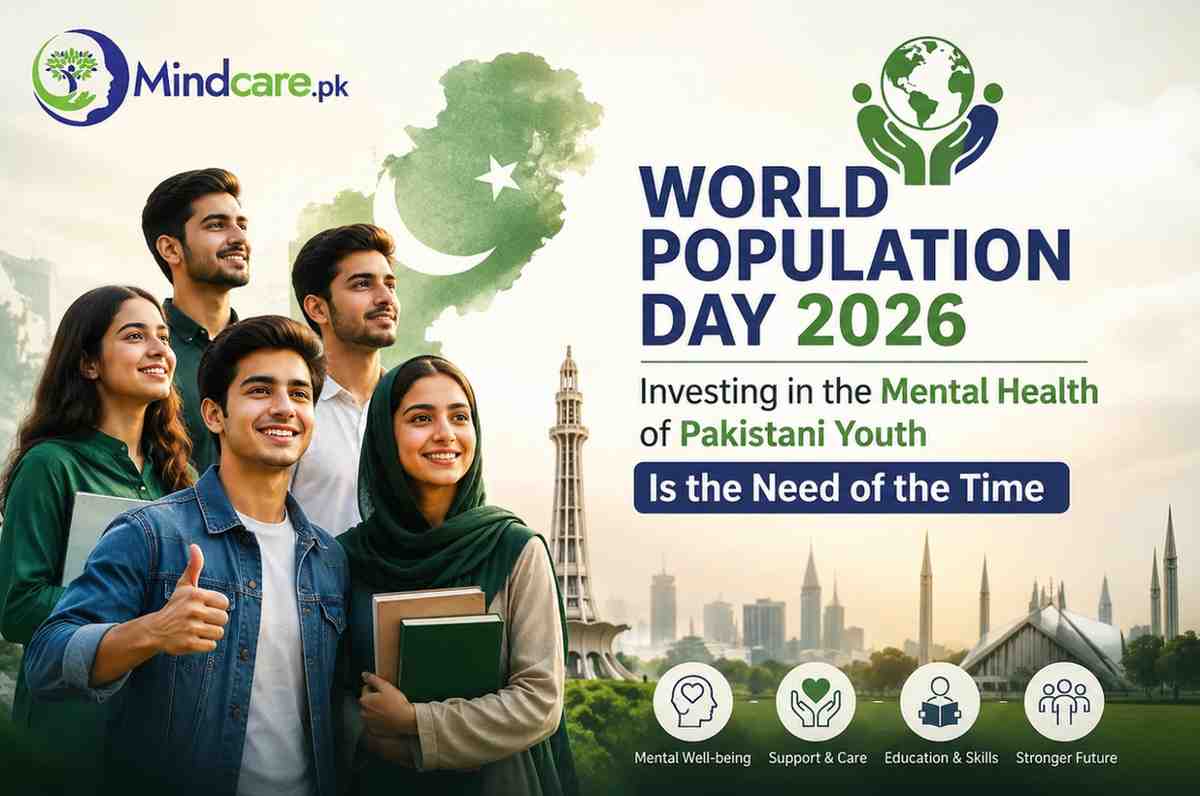
World Population Day 2026: Investing in the Mental Health of Pakistani Youth Is the need of the time
"Realizing the hopes and aspirations of young people – today and for the future."
Every year on 11 July, the world observes World Population Day to highlight issues related to population, sustainable development, and human well-being. Since its establishment by the United Nations in 1990, each year has focused on a different theme that reflects global priorities.
The World Population Day 2026 theme is:
"Realizing the hopes and aspirations of young people – today and for the future."
This theme emphasizes investing in education, health, skills, and the rights of young people so they can build secure, productive, and prosperous societies.
For Pakistan, however, one critical area deserves far greater attention than it currently receives:
Youth Mental Health
Pakistan's Greatest Strength Is Its Youth
Pakistan is one of the world's youngest countries, with a large proportion of its population under the age of 30. This demographic presents an extraordinary opportunity.
But an important question arises:
Does having a large youth population automatically guarantee national progress?
The answer is no.
A large youth population only becomes a national asset when young people are physically healthy, emotionally resilient, educated, skilled, and mentally capable of contributing to society. Without investing in their mental health, even the largest youth population cannot reach its true potential.
Why Invest in Youth Mental Health?
Today's young people are growing up in one of the most demanding periods in history.
Many Pakistani youth are struggling with:
- Unemployment and job insecurity and Financial stress
- Academic pressure
- Workplace overload and burnout
- Marital and relationship conflicts
- Anxiety disorders, Depression, Trauma, Panic attacks
- Self-harm and suicidal thoughts
- Substance abuse
- Behavioural addictions (gaming, social media, internet addiction)
- Loneliness and social isolation
- Limited access to professional mental health services
When these psychological challenges remain untreated, they reduce motivation, concentration, creativity, productivity, and overall quality of life.
A nation cannot fully benefit from the abilities of young people whose mental health needs remain unmet.
Mental Health Is Not Separate From National Development
Many people believe Pakistan should first invest in employment, infrastructure, economic growth, or industrial development. These investments are undoubtedly important.
However, they cannot achieve their full impact if the people expected to benefit from them are struggling with untreated mental health conditions.
Imagine providing excellent educational opportunities to a student suffering from severe depression.
Or creating employment opportunities for a young adult experiencing disabling anxiety or substance addiction.
Opportunities alone are often not enough.
A healthy mind is what allows people to recognize opportunities, use them wisely, solve problems creatively, and remain productive during difficult times.
Investing in mental health therefore strengthens every other investment made in youth.
Strong Minds Build Strong Nations
Young people with good mental health are more likely to:
- Complete their education
- Find and retain employment
- Build healthy relationships
- Start businesses
- Innovate
- Contribute positively to society
- Raise emotionally healthy families
- Participate in community development
Resilience enables young people to adapt to economic uncertainty, climate change, technological changes, and social challenges.
Pakistan's future depends not only on educated youth—but also on psychologically healthy youth.
What the Evidence Says
According to the World Health Organization (WHO):
- Depression, anxiety, and behavioural disorders are among the leading causes of illness and disability among adolescents and young adults.
- Suicide is one of the leading causes of death among people aged 15–29 years.
- Untreated mental health conditions during adolescence often continue into adulthood, affecting education, employment, relationships, and physical health.
These statistics demonstrate that youth mental health is not simply a healthcare issue—it is a national development issue.
Why Investing in Youth Mental Health Is an Investment—Not an Expense
Some people still view mental health spending as an unnecessary cost.
In reality, it is one of the highest-return investments a country can make.
1. Every Rupee Invested Today Saves Many Tomorrow
Youth is the foundation of productive adulthood.
Early identification and treatment of mental health conditions help prevent:
- School dropout
- Substance abuse
- Unemployment
- Crime
- Domestic violence
- Chronic disability
- Long-term healthcare costs
Healthy youth become productive adults who contribute to the economy rather than requiring long-term support.
2. Organizations Must Prioritize Youth Mental Health
Many young adults spend a large portion of their lives at work.
Healthy workplaces protect mental well-being.
The WHO estimates that around 12 billion working days are lost globally each year due to depression and anxiety, resulting in approximately US$1 trillion in lost productivity annually.
Organizations should therefore:
- Promote healthy work environments
- Prevent workplace bullying
- Reduce burnout
- Encourage work-life balance
- Provide access to psychological support
- Train managers to recognize mental health concerns
- Develop employee assistance programs
Supporting employees' mental health improves productivity, staff retention, and organizational performance.
3. Break the Stigma Around Mental Illness
One of Pakistan's greatest barriers to mental healthcare is stigma.
Many people delay seeking help because they fear:
- Being judged
- Being labelled as "weak"
- Social rejection
- Family criticism
- Damage to marriage prospects
This silence allows problems to worsen.
Pakistan needs nationwide awareness campaigns that promote a simple but powerful message:
Mental illness is not a moral weakness. It is not a character flaw. It is a health condition—just like diabetes, hypertension, asthma, or heart disease—and it deserves timely, evidence-based treatment.
Breaking the stigma around mental health in Pakistan encourages people to seek help early, improving outcomes and reducing long-term suffering.
4. Introduce Mental Health Services in Schools, Colleges, and Universities
Mental health support should begin during childhood—not after years of untreated emotional distress.
Unfortunately, many educational institutions in Pakistan lack:
- School psychologists
- Student counselling centres
- Mental health screening
- Referral pathways
- Emotional well-being programs
A child or teenager experiencing anxiety, depression, bullying, trauma, or emotional difficulties often has nowhere to turn.
Even many colleges and universities that teach psychology do not provide structured psychological support services for their own students.
Establishing counselling services in educational institutions would allow early intervention before problems become lifelong disabilities. Where such services do not yet exist, child and adolescent therapy gives young people and their families a safe, professional place to start.
Read more about the mental health challenges facing children and teens in Pakistan—and how therapy can help.
5. Expand Community Mental Health Services
In many developed countries, community mental health services are integrated into primary healthcare.
People can receive psychological support close to where they live.
Pakistan urgently needs similar services.
Imagine a teenager from a low-income family who develops severe depression but cannot afford private treatment.
Without accessible community services, that young person may:
- Leave education
- Become unemployed
- Develop addiction
- Experience worsening mental illness
- Lose the opportunity to live a productive life
Community-based mental health programs can change these outcomes by making care available before crises occur.
A National Call to Action
Improving youth mental health requires collaboration among:
- Government institutions
- Educational institutions
- Healthcare providers
- Employers
- Families
- Religious and community leaders
- Media organizations
- Mental health professionals
Together, we can create environments where young people feel safe to seek help, develop resilience, and achieve their potential.
Building Pakistan's Future Starts With Healthy Minds
Pakistan's future will not be built by population size alone.
It will be built by young people who are emotionally healthy, psychologically resilient, and mentally prepared to face the challenges of the modern world.
Investing in youth mental health means investing in:
- Better education
- Higher productivity
- Stronger families
- Safer communities
- Economic growth
- National resilience
- Sustainable development
As we observe World Population Day 2026, let us broaden the conversation beyond numbers.
Let us recognize that the greatest investment Pakistan can make is not merely in roads, buildings, or industries—but in the minds of its young people.
Healthy Minds. Resilient Youth. Stronger Pakistan.
If you are a young person struggling silently—or a parent worried about your child—support is available. MindCare connects you with qualified psychologists online, anywhere in Pakistan. Book an appointment with a psychologist and take the first step toward a healthier mind.
References
- World Health Organization. Adolescent Mental Health. https://www.who.int/news-room/fact-sheets/detail/adolescent-mental-health
- World Health Organization. Mental Health at Work. https://www.who.int/news-room/fact-sheets/detail/mental-health-at-work
- United Nations Population Fund (UNFPA). World Population Day 2026. https://www.unfpa.org/world-population-day
- UNICEF Pakistan. Adolescent Development and Participation. https://www.unicef.org/pakistan
- World Health Organization. Comprehensive Mental Health Action Plan 2013–2030. https://www.who.int/publications/i/item/9789240031029