The World Drug Problem: Pakistan's Battle Against Addiction — Old Wounds, New Challenges, and the Path Forward
MindCare.pk | World Drug Day — June 26, 2026
Every year on June 26, the world pauses to confront one of its most persistent public health crises: drug abuse and illicit trafficking. This year's theme — "The World Drug Problem: Persisting Issues, New Challenges, Innovative Responses" — could
not be more relevant to Pakistan.
It is a theme that tells Pakistan's story almost too accurately. The issues are not new. The suffering is not new. But the scale has shifted, the substances have evolved, and the communities bearing the burden have changed. What Pakistan needs now — urgently
— are the innovative responses the theme calls for.
A Crisis That Has Never Left
Pakistan has long stood at the crossroads of the world's largest opium supply chain. Bordered by Afghanistan — historically the world's largest producer of illicit opium — Pakistan has faced drug trafficking pressures for decades. But what was once largely
a transit problem has become a deeply domestic one.
According to the United Nations Office on Drugs and Crime (UNODC), Pakistan is home to an estimated 9 million drug users, a figure that places it among the highest-burden countries in the region. Of these, approximately 4.25 million are
classified as problem drug users in need of treatment — yet formal treatment capacity remains woefully insufficient.
The drugs of choice have shifted over the years. While heroin remains a serious concern, crystal methamphetamine (ice), synthetic opioids, and pharmaceutical drugs obtained without prescription have surged in urban centres. Karachi, Lahore,
Peshawar, and Quetta each carry their own distinct drug landscapes — shaped by geography, poverty, and proximity to supply routes.
These are the persisting issues the 2026 theme names directly.
New Challenges: What Has Changed
The drug crisis in Pakistan in 2026 is not the same crisis it was ten — or even five — years ago.
1. The Rise of Synthetic Drugs
The opium economy in the region has not disappeared, but synthetic drugs now represent a fast-growing and far more difficult-to-intercept threat. Drugs like meth and fentanyl analogues do not require vast agricultural land or seasonal harvests — they
can be manufactured in small urban laboratories. This has decentralised supply chains and made enforcement exponentially harder.
2. Youth and Digital Vulnerability
Pakistan's population is young — nearly 64% is under the age of 30. This is both the nation's greatest strength and its deepest vulnerability when it comes to substance abuse. Social media platforms are being misused to discreetly market substances, normalise
recreational drug use, and connect buyers to dealers. Young people in universities and colleges — particularly in Lahore and Karachi — are increasingly exposed through peer networks amplified by digital connectivity.
3. Economic Despair as a Driver
Unemployment, inflation, and economic instability do not cause addiction — but they feed it. When people lose hope, they seek escape. Pakistan's rising cost of living and youth unemployment have created fertile ground for substance abuse, particularly
in lower-income urban communities and in provinces adjacent to the Afghan border. Economic vulnerability and drug dependency reinforce each other in a cycle that is difficult to break without addressing both simultaneously.
4. Stigma — The Invisible Barrier
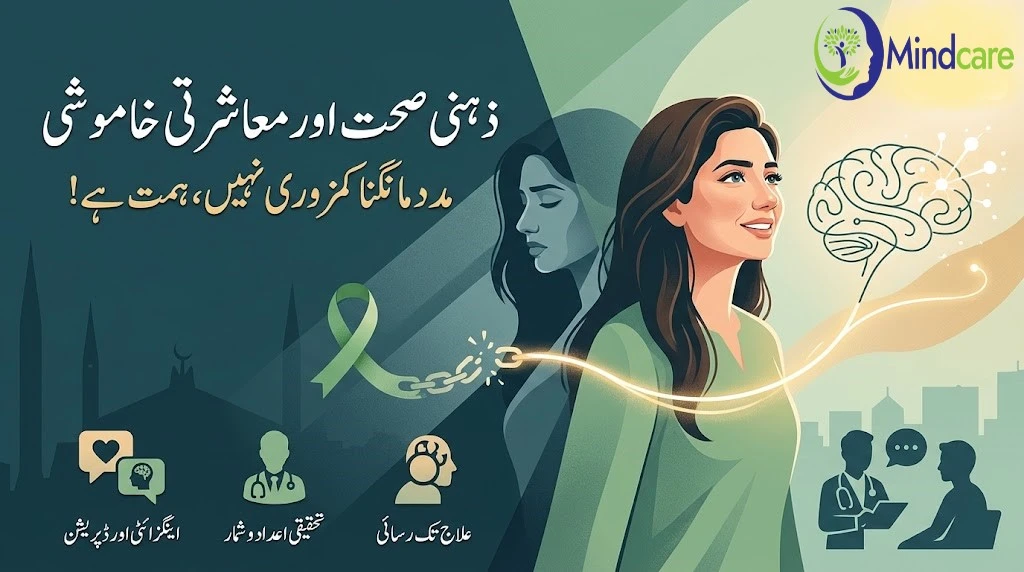
Perhaps the most stubborn challenge is not a drug at all. It is the culture of silence and shame around addiction. In Pakistan, addiction is still widely perceived as a moral failing rather than a medical condition. Families hide their loved ones' struggles.
Individuals delay seeking help for years out of fear of judgment. This stigma kills — not dramatically, but quietly, by keeping people away from the care they need. (We've written more about breaking the stigma around mental health in Pakistan.)
Who Bears the Heaviest Burden?
The human face of Pakistan's drug crisis is too often invisible.
It is the mother in Peshawar whose son disappeared into heroin addiction at 19. The factory worker in Faisalabad self-medicating chronic pain with prescription opioids he can no longer stop taking. The young woman in Karachi pressured into substance use
by an abusive relationship. The child in Quetta who inhales solvents because it dulls the hunger pangs.
Addiction does not discriminate by class, gender, or province — but it does hit hardest where support systems are thinnest.
Women in Pakistan face a particularly invisible struggle. Female drug users are significantly underrepresented in treatment statistics — not because they don't exist, but because social norms make it nearly impossible for them to present at treatment
centres, which are often male-dominated spaces. Reaching women requires intentionally designed, gender-sensitive services. Pakistan has very few of these.
Innovative Responses: What Pakistan Can — and Must — Do
The 2026 theme is not simply a diagnosis. It is a call to action. Innovative responses are not optional — they are a moral and public health imperative.
Treat Addiction as a Health Issue, Not a Criminal One
Pakistan's legal framework still approaches drug users primarily through the lens of law enforcement. While trafficking and supply-side enforcement remain important, criminalising personal drug use drives people underground and away from help. The evidence
globally is clear: decriminalising possession for personal use, combined with investment in treatment, reduces both addiction rates and harm. Pakistan's policymakers need the courage to follow the evidence.
Expand Community-Based Rehabilitation
Large residential rehabilitation centres, while valuable, cannot reach everyone — and many people cannot or will not enter them. Community-based treatment models, where people receive support while remaining in their homes and families, have proven effective
in multiple countries. Pakistan needs to pilot and scale these approaches, particularly in rural areas where no formal services currently exist.
Invest in Mental Health as Prevention
Substance abuse and mental health are deeply intertwined. Anxiety, depression, trauma, and untreated PTSD are among
the most significant drivers of drug use. In Pakistan, where mental health services are scarce and stigmatised, treating the mental health crisis is — in part — a drug prevention
strategy. Platforms like MindCare.pk exist precisely because this gap must be filled. Accessible, affordable, and stigma-free mental health support is one of the most powerful tools we have.
Engage Religious and Community Leaders
In Pakistan, religious scholars and community elders carry profound moral authority. Engaging them as genuine partners — not just messengers — in destigmatising addiction and promoting treatment-seeking has enormous potential. When a respected maulana
speaks about addiction as an illness deserving compassion and treatment, his words reach places a government campaign cannot.
Prioritise Youth Education
Prevention is always more cost-effective than treatment. Integrating evidence-based drug education into school curricula — not the scare-tactic variety that rarely works, but honest, age-appropriate conversations about risk, peer pressure, mental health,
and help-seeking — can shift trajectories at the population level. This requires investment and political will.
Strengthen the Helpline and Digital Support Ecosystem
Pakistan needs a robust, nationally promoted, free and anonymous drug helpline — staffed by trained counsellors, available in Urdu and regional languages, accessible via call and SMS. Digital platforms offering online counselling,
peer support communities, and self-assessment tools can bridge the gap for those who would never walk into a clinic.
The Role of Families
In Pakistani culture, the family is both the first line of defence and — sometimes unintentionally — a barrier to recovery. Families often enable addiction through denial, or abandon their loved ones out of shame. Neither response helps.
Recovery research consistently shows that family involvement, when handled skillfully, dramatically improves outcomes. If you have a loved one struggling with substance use, the most important thing to know is this: you are not alone, this is not your fault, and help exists.
At MindCare.pk, we work with families as well as individuals — because healing rarely happens in isolation.
A Word of Hope
World Drug Day can feel heavy. The statistics are enormous. The challenges are real. It is easy to feel that this is a problem too large to solve.
But change happens — and it happens through people choosing to act.
It happens when a young man in Lahore decides to call a helpline instead of using again tonight. When a doctor in Karachi stops prescribing opioids carelessly. When a schoolteacher in Quetta talks honestly to her students about peer pressure. When a family
in Peshawar stops hiding their son's illness and starts helping him find treatment.
It happens when we — as individuals, communities, and institutions — decide that people struggling with addiction deserve compassion, care, and a genuine chance at recovery.
That is the innovative response this moment demands.
If You or Someone You Know Needs Help
MindCare.pk offers confidential mental health support and can connect you with appropriate resources for substance use concerns. You do not have to face this alone.
Reach out to us at mindcare.pk
This blog was published in recognition of the International Day Against Drug Abuse and Illicit Trafficking, June 26, 2026, under the global theme: "The World Drug Problem: Persisting Issues, New Challenges, Innovative Responses."
© 2026 MindCare.pk — Mental Health for Pakistan