
MindCare Pakistan offers convenient and affordable online therapy, connecting you with licensed therapists from the comfort of your own home. Find support for anxiety, depression, relationships, and more.

Connect with a qualified psychologist online from the convenience of your home in Pakistan.

Book Appointment
Address

Islamabad, Pakistan
Support That Fits Their Age and Their World

Online Child & Adolescent Therapy

When a Child's Behaviour May Be Saying What They Cannot Yet Explain.

Children and teenagers do not always tell adults directly when something is wrong. Emotional difficulties may appear as withdrawal, irritability, worry, anger, changes in sleep, school problems, conflict at home, or simply seeming unlike themselves.

Child and adolescent therapy provides developmentally appropriate psychological support while helping parents understand how they can support their child without making the young person feel that they are simply “the problem.”

Book an Appointment
✓ Age-Appropriate Support✓ Parent Guidance When Appropriate✓ Private Online Sessions
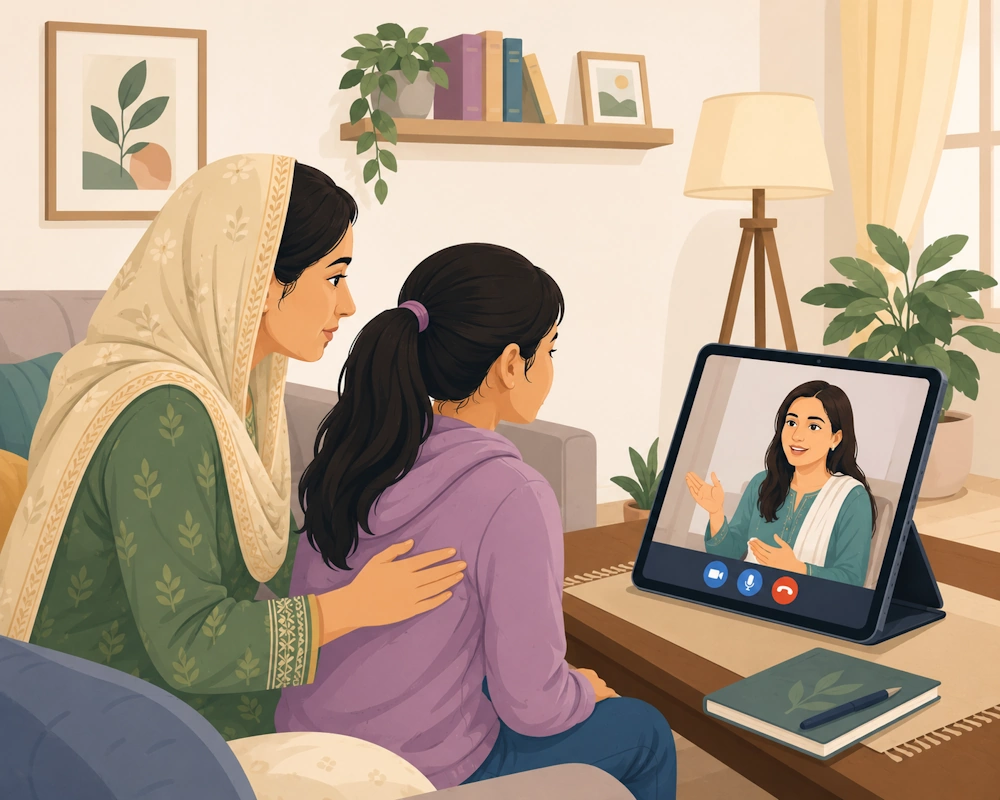
Child and parent receiving online psychological support from a psychologist
Children Communicate in Different Ways

Sometimes the First Sign Is a Change in Behaviour

A child may not have the words—or may not feel ready—to explain worry, sadness, social pressure, family stress, or another difficult experience. Changes in behaviour can be one way distress becomes visible.

Mood & Emotions

Persistent worry, sadness, irritability, frequent emotional outbursts, fears, or becoming unusually sensitive or withdrawn.

School & Learning

A noticeable change in motivation, concentration, attendance, academic performance, or anxiety connected with school.

Friends & Social Life

Bullying, friendship difficulties, social anxiety, isolation, peer pressure, or feeling that they do not fit in.

Home & Family

Frequent conflict, difficulty adjusting to family changes, anger at home, sibling issues, or tension around rules and boundaries.

Psychological support adapted to children and teenagers
Not Adult Therapy in Smaller Chairs

Therapy Should Change as a Child Develops

A five-year-old, a twelve-year-old, and a seventeen-year-old experience and communicate difficulties very differently. Psychological support should reflect the young person's developmental stage, communication style, circumstances, and ability to understand what they are experiencing.

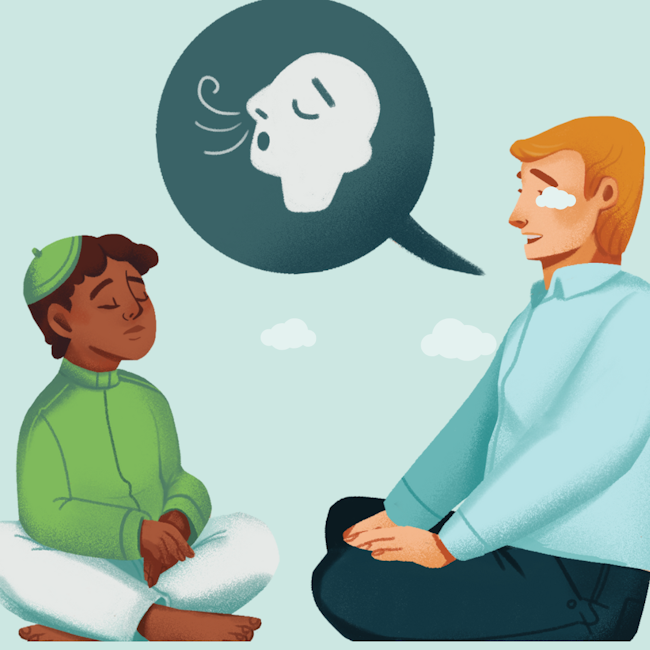
With younger children, a psychologist may use age-appropriate activities, visual tools, stories, creative methods, or play-informed techniques where suitable. Work with teenagers may involve more direct conversation about emotions, relationships, identity, coping, school pressure, decision-making, and independence.

The exact approach depends on the concern and the psychologist's training. Not every online format or therapeutic method is suitable for every age or difficulty, so an initial assessment is important.

For Parents

“Should I Be Worried, or Is This Just a Phase?”

Children naturally change as they grow, and occasional difficult behaviour or strong emotion does not automatically mean a child needs therapy. What matters is the wider pattern.

It may be worth seeking professional guidance when a change persists, becomes more intense, causes significant distress, interferes with school or relationships, affects everyday functioning, or leaves you unsure how best to respond.

  • The change is lasting rather than occasional
  • Several areas of life are being affected
  • Your child seems distressed or increasingly withdrawn
  • Family attempts to help are not improving the situation
  • You are concerned about safety or a major change in behaviour
For Teenagers

Therapy Is Not Just Another Adult Telling You What to Do

Teenagers may be reluctant to attend therapy if they expect to be judged, lectured, or treated as the source of every family problem. A useful therapeutic relationship should give the young person space to express their own perspective.

Therapy may help a teenager explore stress, anxiety, low mood, anger, friendships, bullying, family conflict, self-esteem, identity concerns, academic pressure, or difficult changes in their life.

The psychologist should explain how sessions work, what privacy means, and the circumstances in which information may need to be shared for safety or according to professional requirements.

A Family Is a System

Parents Matter—but Therapy Still Needs Space for the Child

Parents and caregivers often hold essential information and play an important role in change. At the same time, children and especially teenagers may need an appropriate degree of privacy to speak openly.

Parents Provide Context

Parents can help the psychologist understand development, family circumstances, school concerns, changes in behaviour, routines, strengths, and what has already been tried.

The Young Person Needs a Voice

Children and teenagers should have opportunities, appropriate to their age and circumstances, to describe what life feels like from their perspective rather than having adults speak entirely for them.

Support Continues at Home

Where appropriate, psychologists may help parents respond differently, improve communication, establish workable routines or boundaries, and reinforce helpful changes outside sessions.

Starting Therapy

What Happens Before and During the First Sessions?

The starting process varies with age, the reason for seeking help, and the psychologist's approach. A parent or caregiver may first provide background information, and the psychologist may then meet with the child or teenager in an age-appropriate way.

Assessment may consider emotional well-being, behaviour, family relationships, school, friendships, development, health, significant life events, strengths, and any safety concerns.

The Goal Is to Understand Before Trying to “Fix”

A behaviour that looks like defiance, laziness, anger, or lack of motivation can have different meanings. Anxiety, low mood, bullying, learning difficulties, family stress, sleep problems, neurodevelopmental differences, or other factors may sometimes contribute.

A thoughtful assessment helps determine what kind of support is appropriate and whether another professional—such as a pediatrician, psychiatrist, school specialist, or other healthcare provider—may also need to be involved.

Treatment should be based on the individual child or teenager rather than applying the same technique to every young person.

Not Sure Whether Your Child Needs Therapy?

A professional consultation can be a useful first step in understanding what you are seeing and what kind of support may be appropriate.

Pakistanis at Home and Abroad

Growing Up Between Family, School, Culture, and Change

Children and teenagers can be affected by expectations from several worlds at once: home, school, extended family, friends, social media, and the wider culture around them. For Pakistani families living abroad, young people may also be navigating different cultural expectations across generations.

Therapy can make space for these realities without assuming every Pakistani family is the same. Relevant issues may include family expectations, academic pressure, migration, identity, language, belonging, extended-family relationships, or differences between a young person's social environment and life at home.

  • Support that considers the young person's family context
  • Awareness of school, peer, and cultural pressures
  • Online access for families in Pakistan and abroad where professionally appropriate
  • Parent involvement adapted to age and individual needs
Safety & Appropriate Care

Some Concerns Need More Immediate or Specialist Support

If a child or teenager may be in immediate danger, has seriously harmed themselves, is expressing an immediate intention to harm themselves or someone else, or is experiencing another urgent safety crisis, routine online therapy booking should not be the only response. Seek urgent local emergency or crisis support appropriate to where the young person is located.

Online Therapy Is Not Suitable for Every Child

Age, attention, privacy at home, the nature and severity of the concern, safeguarding needs, and the type of assessment or treatment required can all affect whether online therapy is appropriate. Suitability should be assessed individually.

FAQ & Answers

Common Questions About Child & Adolescent Therapy

Consider seeking professional guidance when emotional or behavioural changes persist, cause significant distress, affect school, relationships or daily functioning, or leave you concerned about your child's well-being. An assessment can help clarify whether therapy or another type of support is appropriate.

Parent or caregiver involvement often forms an important part of child therapy, but the level of involvement varies with age, developmental stage, the concern being addressed, and the therapeutic approach. Your psychologist should explain how this will work.

Privacy and information-sharing should be discussed clearly at the beginning of therapy. The approach depends on age, circumstances, consent, professional requirements, and safety. Psychologists also have obligations to act when there are serious safeguarding or safety concerns.

It depends on the child's age, attention, communication style, concern, available privacy, parent involvement, and the psychologist's approach. Some children may benefit from online work, while others may need in-person, family-based, developmental, medical, or other specialist assessment and support.

Forcing engagement can make therapy difficult. It may help to understand what they are worried about, explain that therapy is not a punishment, and involve them appropriately in decisions. Parents can also seek guidance themselves about how to respond and what options may be available.

Therapy may help when emotional difficulties, anxiety, stress, motivation, bullying, or other psychological factors are affecting school life. Academic difficulties can also have learning, developmental, medical, or environmental causes, so another type of assessment may sometimes be appropriate.