
MindCare Pakistan offers convenient and affordable online therapy, connecting you with licensed therapists from the comfort of your own home. Find support for anxiety, depression, relationships, and more.

Connect with a qualified psychologist online from the convenience of your home in Pakistan.

Book Appointment
Address

Islamabad, Pakistan
Professional Support, Wherever You Are

Online Anger Management Therapy

Understand Your Anger. Respond Differently. Build Healthier Relationships.

Anger is a normal emotion, but when reactions feel difficult to control or repeatedly lead to regret, conflict, or damaged relationships, therapy can help you understand what happens before anger takes over.

Work online with a psychologist to recognise triggers, manage intense reactions, and communicate difficult feelings in healthier ways.

Book an Appointment
✓ Private Online Sessions✓ Professional Support✓ Accessible Wherever You Are
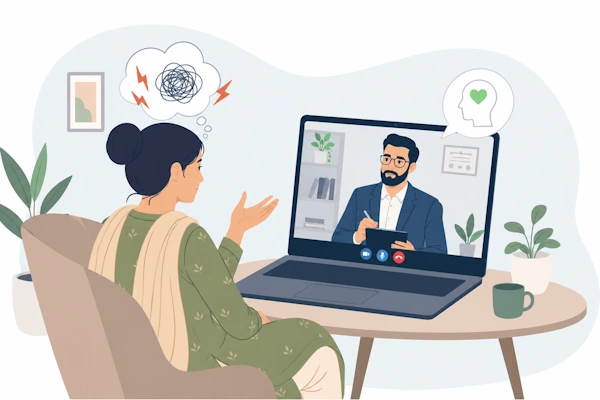
Woman attending an online anger management therapy session with a psychologist

When Anger Starts Affecting Your Life

Anger can signal that something feels unfair, threatening, frustrating, or out of control. Feeling angry does not automatically mean there is a problem. What matters is how often it happens, how intense it becomes, and what happens when you respond to it.

For some people, anger appears as shouting or arguments. For others, it may involve sarcasm, harsh words, breaking things, impulsive reactions, prolonged resentment, or withdrawing and shutting people out. You may calm down later and regret what happened, yet find the same pattern repeating when another trigger appears.

  • Frequent arguments or losing your temper
  • Feeling easily provoked, criticised, or disrespected
  • Shouting, harsh words, or impulsive reactions
  • Regretting what you said or did afterward
  • Holding onto resentment after disagreements

How Anger Management Therapy Can Help

An angry reaction often begins before the argument or outburst itself. A particular situation may trigger thoughts about being ignored, criticised, treated unfairly, disrespected, or losing control. Physical tension can rise quickly, making it harder to think clearly and easier to react automatically.

Therapy looks beyond the outburst itself. By understanding your personal triggers, thoughts, warning signs, and learned ways of responding, you can begin creating more space between feeling angry and acting on it. The aim is not to remove assertiveness, but to help you respond with greater control and communicate what matters more effectively.

  • Recognise triggers and early warning signs
  • Create space between feeling angry and reacting
  • Develop emotional-regulation strategies
  • Communicate needs and boundaries more effectively
  • Reduce recurring conflict and improve relationships
Therapy That Fits Real Life

Support for Changing Unhelpful Anger Patterns

The aim is not to stop you from ever feeling angry. It is to help you understand the emotion, respond with greater control, and express what matters without allowing anger to damage what matters to you.

Understand Triggers

Identify situations, thoughts, and warning signs that appear before anger escalates.

Respond With Control

Learn ways to pause, regulate intense emotions, and make more deliberate choices.

Communicate Better

Express frustration, needs, and boundaries without escalating conflict.

Protect Relationships

Work on recurring patterns affecting your partner, family, or work life.

Your First Session

What to Expect from Anger Management Therapy

Your first session is a chance to talk about what has been happening without needing to justify every feeling or arrive with a perfect explanation. Your psychologist may ask about situations that trigger anger, what you notice in your thoughts and body, how you usually react, what happens afterward, and how these patterns affect your relationships or daily life.

Therapy can then focus on the areas that matter most to you. That might mean reducing explosive reactions, handling criticism or frustration differently, communicating more effectively with a partner or family, understanding long-standing resentment, or learning to recognise and regulate anger before it reaches a point where you feel out of control.

A Personal Approach

Depending on your needs and your psychologist's assessment, therapy may draw on approaches such as Cognitive Behavioural Therapy (CBT), emotional-regulation strategies, communication and problem-solving skills, relaxation techniques, or other appropriate psychological approaches.

Discussing anger can feel uncomfortable, particularly when it involves conflict at home, relationship difficulties, family expectations, or behaviour you regret. Online therapy provides a private way to seek support without adding regular travel to your schedule.

For Pakistanis living locally or abroad, family roles, expectations, communication styles, work pressures, and cultural context can all shape how conflict is experienced and expressed. Therapy can consider the context relevant to you while focusing on your individual experiences, relationships, and goals.

Ready to Change the Way You Respond to Anger?

Take the first step toward understanding the pattern and developing healthier ways to respond.

FAQ & Answers

Common Questions About Anger Management Therapy

Consider seeking support if anger feels difficult to control, leads to repeated arguments or impulsive behaviour, causes regret afterward, or is damaging your relationships, family life, work, or well-being. You can also seek help before anger reaches a crisis point.

The goal is not to eliminate anger. Anger is a normal emotion and can sometimes signal that something important needs attention. Therapy focuses on understanding your reactions and helping you express and manage anger without allowing it to become harmful or destructive.

It can help when anger and communication patterns contribute to repeated conflict. Individual anger management therapy can focus on your own triggers and responses. If the main concern involves the relationship itself and both partners want support, relationship or couples therapy may also be worth considering.

There is no fixed number of sessions for everyone. The duration can depend on how long the patterns have been present, what triggers them, their impact on your life, your goals, and whether other concerns are involved. Your psychologist can review progress and discuss the appropriate duration with you.

Yes, anger management therapy can be provided through online sessions when appropriate. This can make support easier to access around work, family, or location constraints and gives you a private setting in which to discuss triggers, reactions, and relationship difficulties.